


The way the surface peeled does not establish whether the cause is hydrolysis. Similar-looking failures still require the use conditions, the cleaning method and the material build-up before a cause can be found.
Start by keeping records and samples that can be compared. Record where and how the product was used, which area changed and from when; put together, these are what you examine when you investigate the cause.
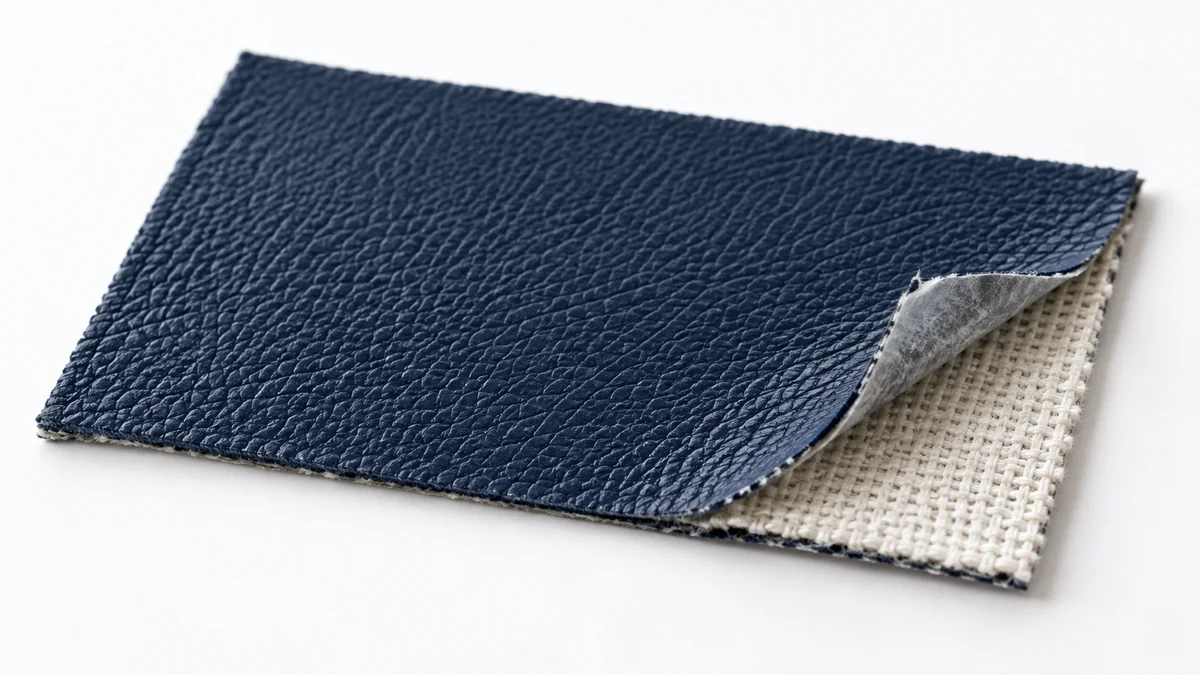
Hydrolysis is a material breaking down
Hydrolysis is water breaking the chemical bonds of a polymer. PU-coated fabric exposed to moisture and heat over time can be affected by it, and how well it resists depends on the PU formulation and the manufacturing conditions.
Similar peeling does not mean the same cause. ACT notes that hydrolysis of a PU coating can show as cracking, peeling or layer separation, but the wrong cleaner can produce a similar look. The image above shows how the layers separate; it does not determine the cause.
Photograph the whole product and the peeled area together
A close-up shows the peel boundary well but not where and how widely it appears on the product. Keep a photograph of the whole product, one of the area around the problem, and a close one of the surface; plus the back and the label if you can.
| What you see | What to check alongside |
|---|---|
| The same thing appears on several areas or products | When it was first noticed, how each product was used and stored, the production lot and the time in use |
| It clusters where the material folds or touches | Where it happened, the processing history (cutting, sewing), repeated contact and how it is used |
| The change shows where it has been wiped | The cleaning product used, how and how often, and when the problem was noticed |
This table is a checklist so nothing is left out of the record. No single row decides the cause on its own.
Keep used and unused material apart
Do not throw out everything that failed: keep samples for investigation. Where possible include unused material from the same lot and the approved sample, noting where each came from and how it was stored. If the approved sample is from a different lot, mark that too.
Peeling more of the surface or trying different cleaners changes the original state. Stop further handling and agree the sample size, quantity and packing with the supplier or the laboratory first.
A microscope image can be added, but it does not settle the composition or the cause of degradation on its own. What an image can show is set out in the microscopy guide.
Test duration is not service life
If a report says a hydrolysis test ran for a number of weeks, read the method and conditions with it. ACT states there is no direct relationship between weeks of testing and years in service: 'passed 5 weeks' is not '5-year warranty'.
A test report is evidence for choosing a material, not proof of what caused an existing failure. Check that the tested sample shares the code and specification of the product under investigation, and read it together with the use history and the examination of the actual part.
Put everything for the supplier into one package
- Code, specification and lot, the date received and when use began
- Total quantity, the quantity affected, and photographs marking where it happened
- Use and storage conditions, cleaning products and care
- A list of the used parts, unused material and approved sample held
- What is established so far, and what is still unconfirmed
When approaching the supplier, lead with what was observed rather than a conclusion. Instead of 'this is a hydrolysis failure, replace it', try 'peeling appeared in this area from this time; we would like to look at the cause together with the sample'.
Once the cause is narrowed down, review whether to reorder the same specification or change the finish or the build-up. When choosing candidates again, the PVC, PU and silicone comparison guide sets out how to re-examine where and how the material will be used.
Sources
- ACT · Hydrolysis: What You Need to Know
What is Hydrolysis?, What does Hydrolysis Failure look like?, and the relationship between test weeks and service years. Guidance for furniture coated fabric, not a rule setting warranty terms for every product.
Written with reference to the sources above. The specification and performance of the material you buy must be confirmed from its own datasheet and test reports.
Enquire with this guide
Tell us the product or the change you have in mind. The title of the guide you are reading is added to your enquiry.
Prepare your enquiry