


In a finished roll of synthetic leather the surface and the back are what you notice first. The process diagram shows which layers are built in between, and when the backing fabric goes on.
The PVC casting described here builds the coating on a paper called release paper. The surface and foam layers are formed, the backing fabric is bonded, and at the end the paper is peeled away. The diagram shows one production route — the one with a foam layer.
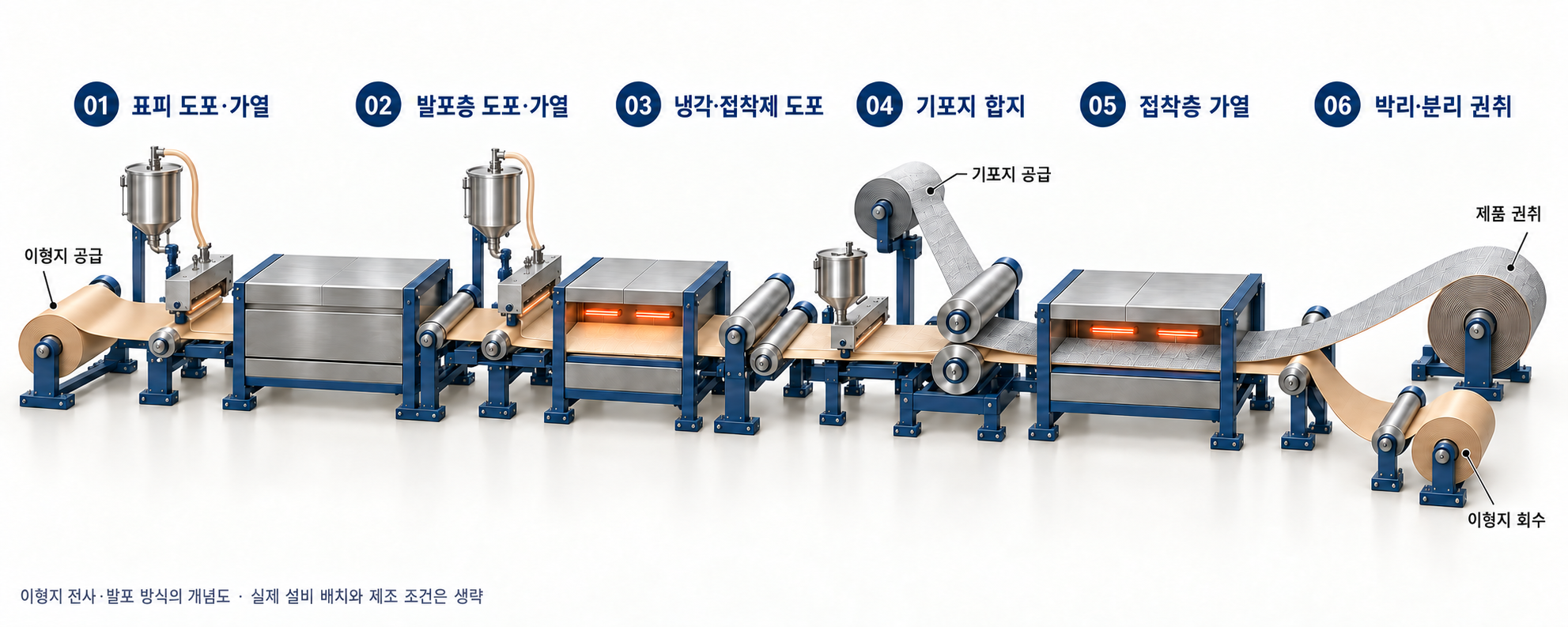
The diagram begins at the skin coating. Mixing the paste happens before it. Equipment and layer thickness are simplified and are not real specifications; the detailed material route is at the end of this guide.
The face that lay against the paper becomes the surface
Release paper is the carrier that supports the coating while it is made, and it is peeled off later. If the paper carries a pattern, that pattern transfers to the surface of the coating.
The face that lay against the paper becomes the surface of the product. Materials are built up on top of it, so the layer order looks reversed when you compare a finished roll with the process diagram.
Preparing the paste and forming the skin
First the PVC resin is dispersed in plasticiser with the other components to form a spreadable paste called plastisol. The skin compound and the foam compound are mixed separately.
The skin compound — the layer that will become the surface — is spread on the release paper and heated. The diagram starts at this coating step; mixing comes before it.
Adding the foam layer
The foam compound is spread over the finished skin. The heat that follows turns it into the foam layer.
Not every cast product has a foam layer; some are made without foaming. The diagram here is the version with one.
Bonding the backing fabric
Once the foam has cooled, adhesive is applied and the backing fabric is fed from a separate roll and bonded on. Korean calls this backing fabric giboji, and the bonding step lamination.
The release paper and the backing fabric do different jobs. The paper supports the coating during production and is removed; the backing stays in the finished product. Giboji is also not a name for the foamed PVC layer.
In the route described here, the fabric is bonded and then heated again to set the adhesive. Peeling off the release paper comes after that.
Winding product and release paper separately
When the bonding step is done the release paper is peeled away — the step called stripping. The paper and the synthetic leather wind onto separate rolls, which is what winding means here.
That is why the diagram ends with the material splitting in two: the product winds onto one roll, the peeled paper onto another.
Pattern from the paper, or from a roll
In this process the pattern comes from the release paper. Making the texture with a heated roll instead is a different route, shown in the PVC calendering guide.
Some products add finishing such as a protective coat or printing. Keep two questions separate with your supplier: how the base is made, and what finish goes onto the surface.
Look at the front and the back together
On a sample, look at the grain and feel of the surface, and at the fabric on the back. Set the sample against the process diagram, and it becomes easy to see where the skin and the backing sit.
What to send with a sample request
When you ask for a sample, send the product it is for, the thickness you want, and the sewing or bonding that follows. If you already use a material, say what you would change. If the specification is not settled yet, a current sample and a photo of the product are enough to start.
Material flow and process order
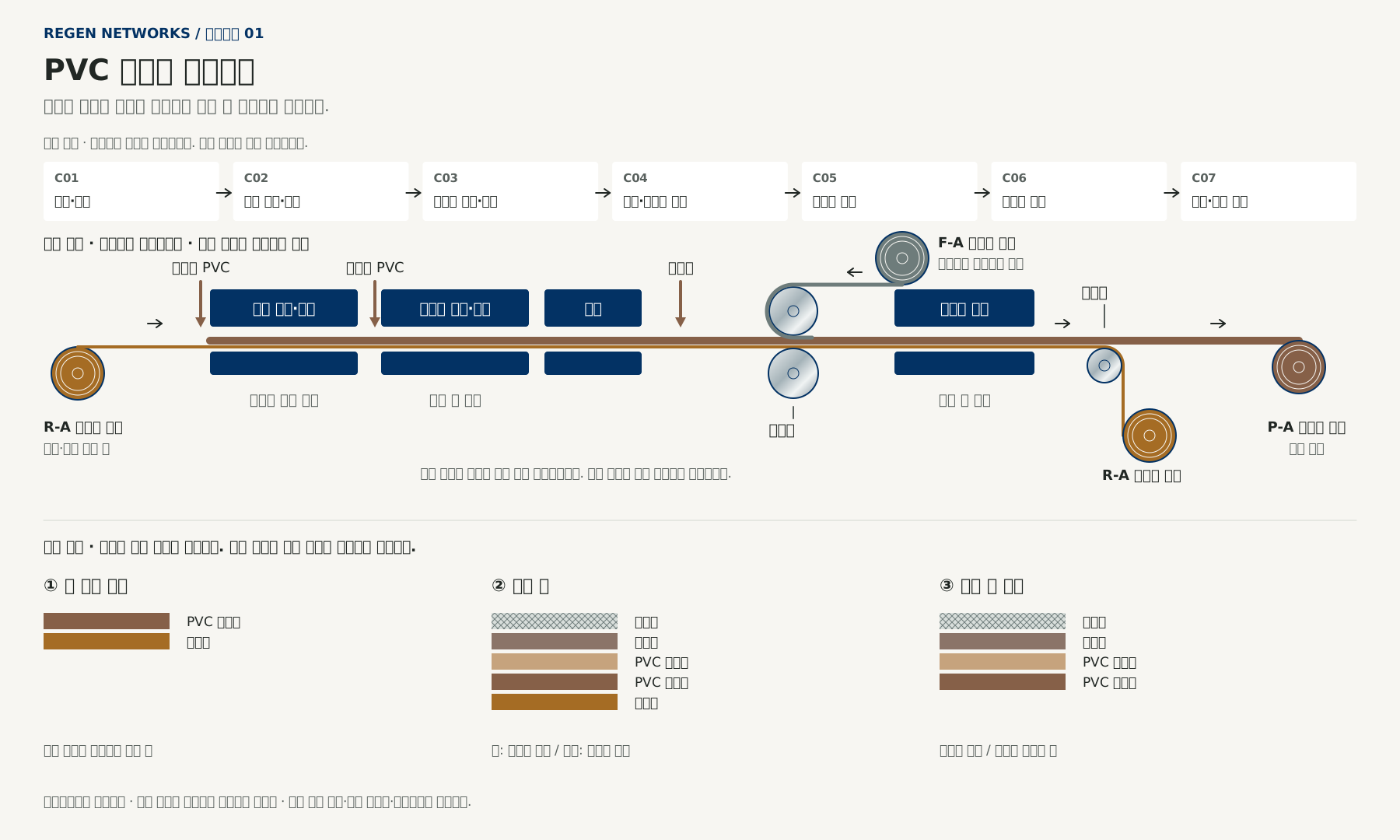
Where each material enters and leaves
Figures 01–06 match C02–C07 in the route diagram below; C01 is the mixing and dispersion that happens before it. After lamination the layers, from the top, are backing, adhesive, foam, skin and release paper. Straight after peeling, the surface of the product faces down.
| Route | Start | Link | End |
|---|---|---|---|
| R-A | Release paper feed roll | Peel point | Release paper take-up |
| F-A | Backing fabric feed roll | C05 lamination | Stays in P-A |
| P-A | Combines with the fabric at C05 | C06 heating → C07 peeling | Product winder |
Multi-layer coating and machine differences
The skin and the foam are made in separate coating and heating steps. In the diagram here, the backing is bonded after both layers are formed.
OLBRICH describes both a three-head route and a route that coats and gels two layers together, so the number of heads and the heating order differ from line to line. The layer build, backing and properties of the product you are reviewing have to come from that product's own documents.
Terms used here
- Plastisol
- PVC resin dispersed in plasticiser into a spreadable paste
- Release paper
- The carrier that supports the coating and is later removed
- Lamination / peeling
- Bonding the material / separating the carrier
Sources
- Vestolit · Artificial Leather
2022-10, p.4 Manufacturing, steps 1–5
- LINTEC · Casting Paper R-series
Use of Casting Paper in synthetic leather production; Product grade
- Spradling · Terminology for vinyl-coated fabrics
8/2020, Cast Coating; Non-expanded Vinyl; Calender
- OLBRICH · PVC coating method for artificial leather lines
Written with reference to the sources above. The specification and performance of the material you buy must be confirmed from its own datasheet and test reports.
Enquire with this guide
Tell us the product or the change you have in mind. The title of the guide you are reading is added to your enquiry.
Prepare your enquiry