


Process · choosing materials · observation
Synthetic leather and sewing guides
How synthetic leather is made, how to choose samples, and what to read when a quality problem appears. Sewing, fabric and trim material is here as well.
Jump to the searchNew here?
Where should you start with synthetic leather?
Start with the guide that matches what you are doing: choosing a material, finding why a surface peeled, or comparing quotes.
- 01Choosing a materialPVC, PU or silicone: what should you base the choice on?Look at how each material is built and made, then narrow the candidates to match the product, where it will be used and how it will be processed.
- 02When the surface peelsIf PU synthetic leather peels, is it always hydrolysis?When a surface cracks or peels, write down what you can see, then work through what you need to establish the cause.
- 03Comparing quotesSynthetic leather quotes: is the price per metre enough to compare?Work out the cost per usable area from the width you can actually cut, then compare cutting yield, order quantity and the extra costs.
All resources
Search for a material or a process
16 guides, plus emboss samples and a sewing terminology dictionary. Titles, descriptions and full text are searchable.
Synthetic leather first, with sewing, fabric and trim material alongside.
All guides
Material explanations, production processes, how to compare samples and real observation notes.
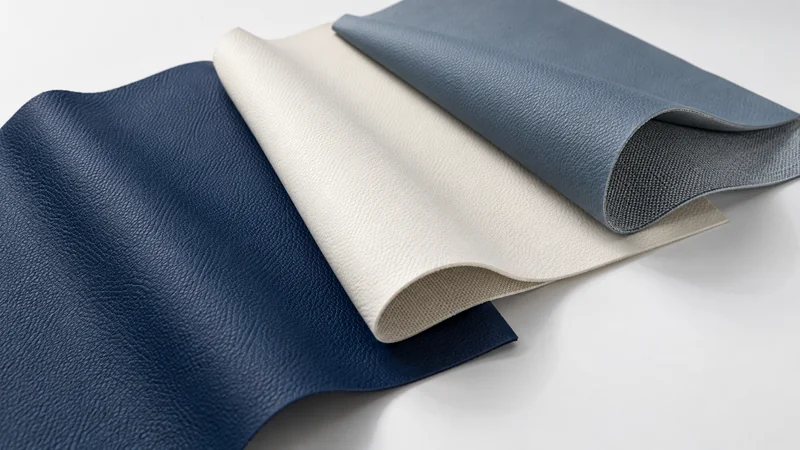
PVC, PU or silicone: what should you base the choice on?
Look at how each material is built and made, then narrow the candidates to match the product, where it will be used and how it will be processed.
Read the guide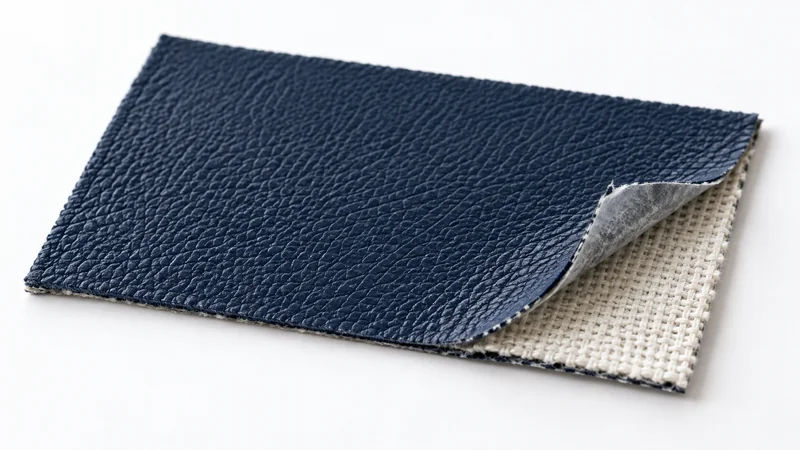
If PU synthetic leather peels, is it always hydrolysis?
When a surface cracks or peels, write down what you can see, then work through what you need to establish the cause.
Read the guide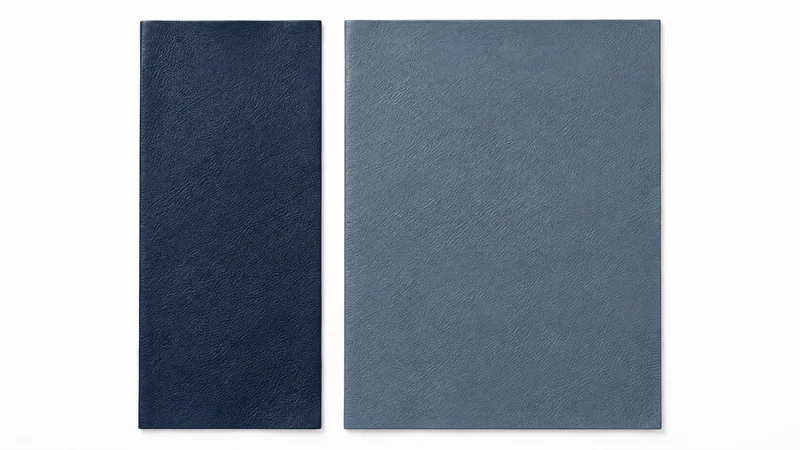
Synthetic leather quotes: is the price per metre enough to compare?
Work out the cost per usable area from the width you can actually cut, then compare cutting yield, order quantity and the extra costs.
Read the guide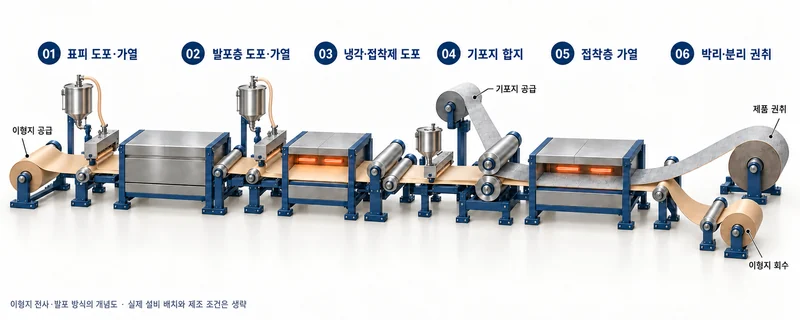
PVC casting: building synthetic leather on release paper
Follow PVC casting from forming the surface layer and bonding the backing fabric to removing the release paper.
Read the guide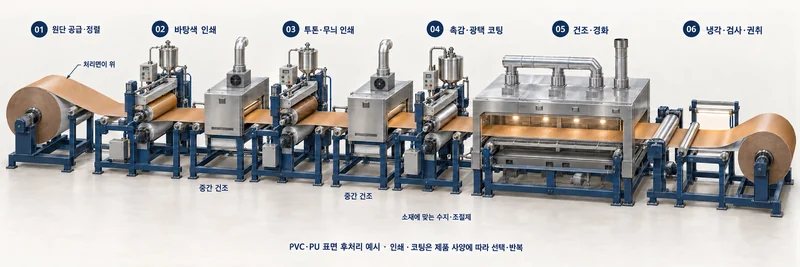
Adjusting colour, feel and gloss with synthetic leather finishing
Printing and coating on top of a finished base adjust colour, two-tone, feel and gloss. The sequence and the chemicals follow the material and the product specification.
Read the guide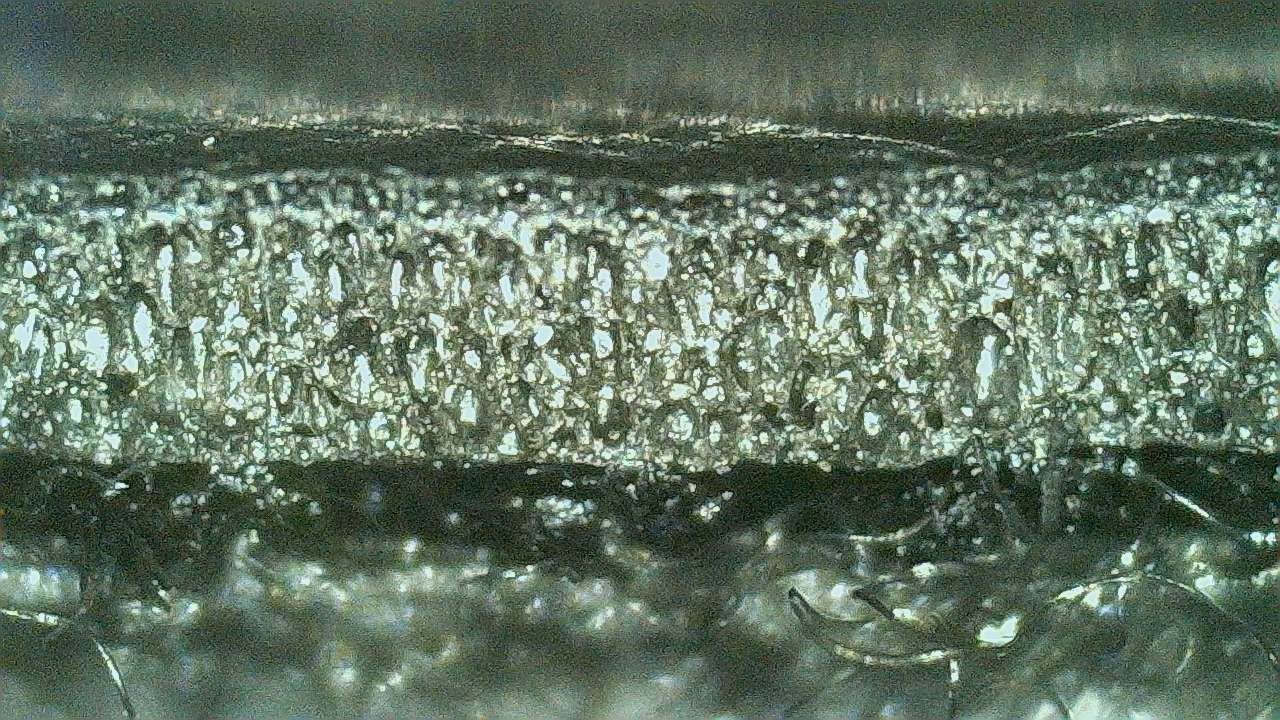
What can a microscope image of synthetic leather tell you?
Using the real microscope images REGEN holds: what can be observed, and what information is still missing.
Read the guide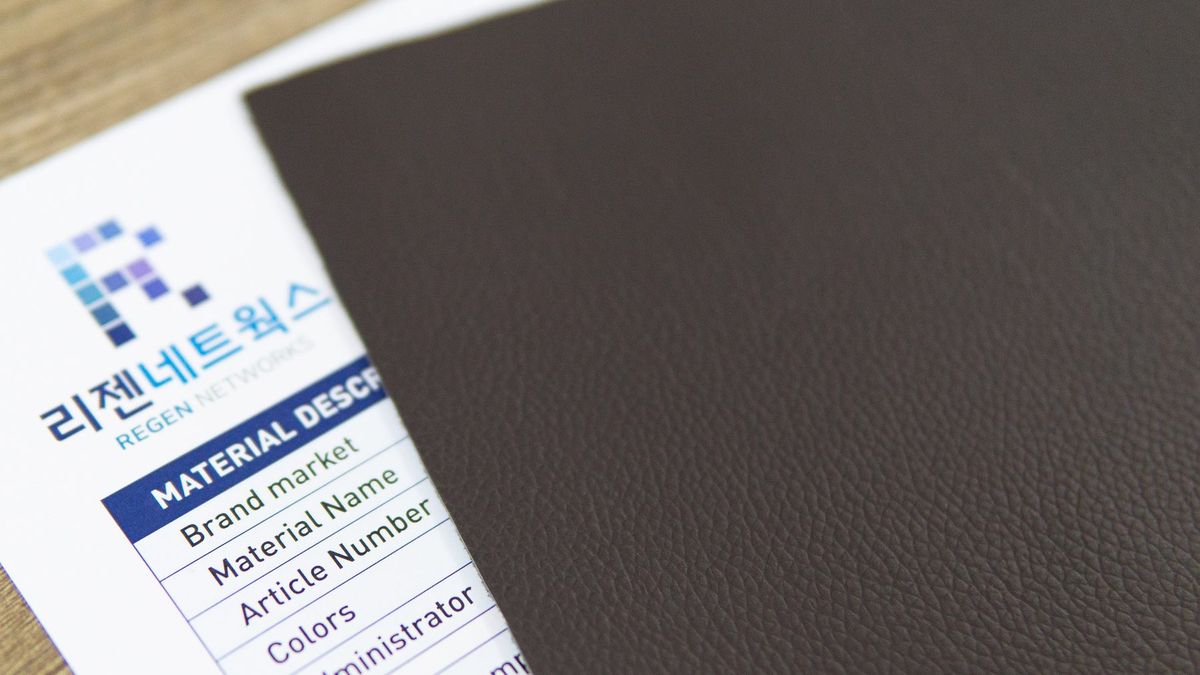
PU synthetic leather samples: what should you compare?
Decide where it will be used, then compare front and back, processing conditions and the test data you need.
Read the guide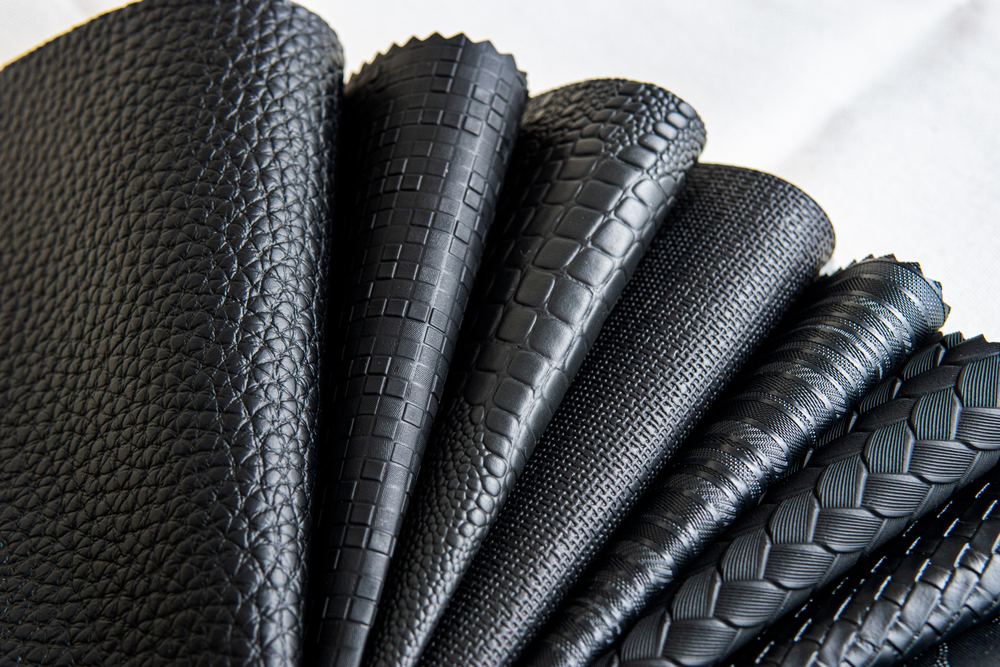
Choosing an embossed grain and approving the physical sample
Pick a grain from the photographs, check it against the product size and cutting direction, then compare feel and gloss on the real sample.
Read the guide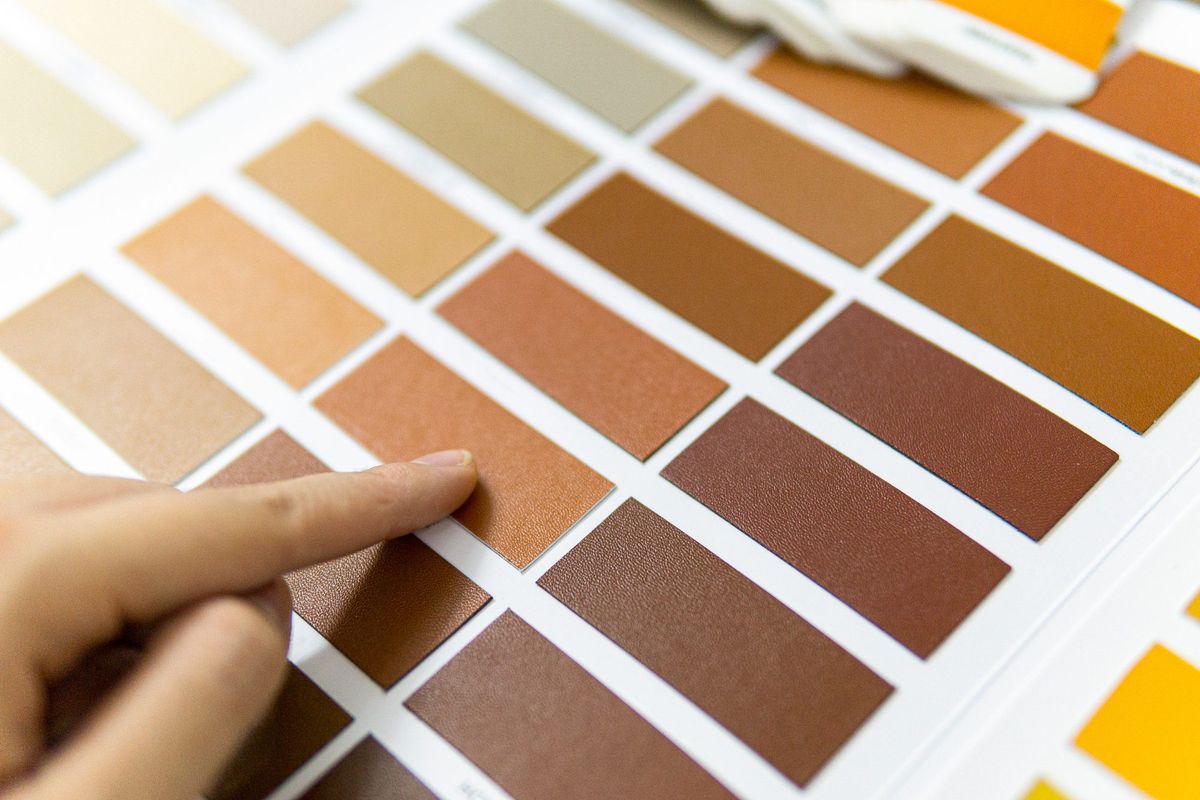
Comparing and approving fabric colour with a lab dip
Compare colour under the same reference and conditions, and keep the sample and the approval on file for every submission.
Read the guide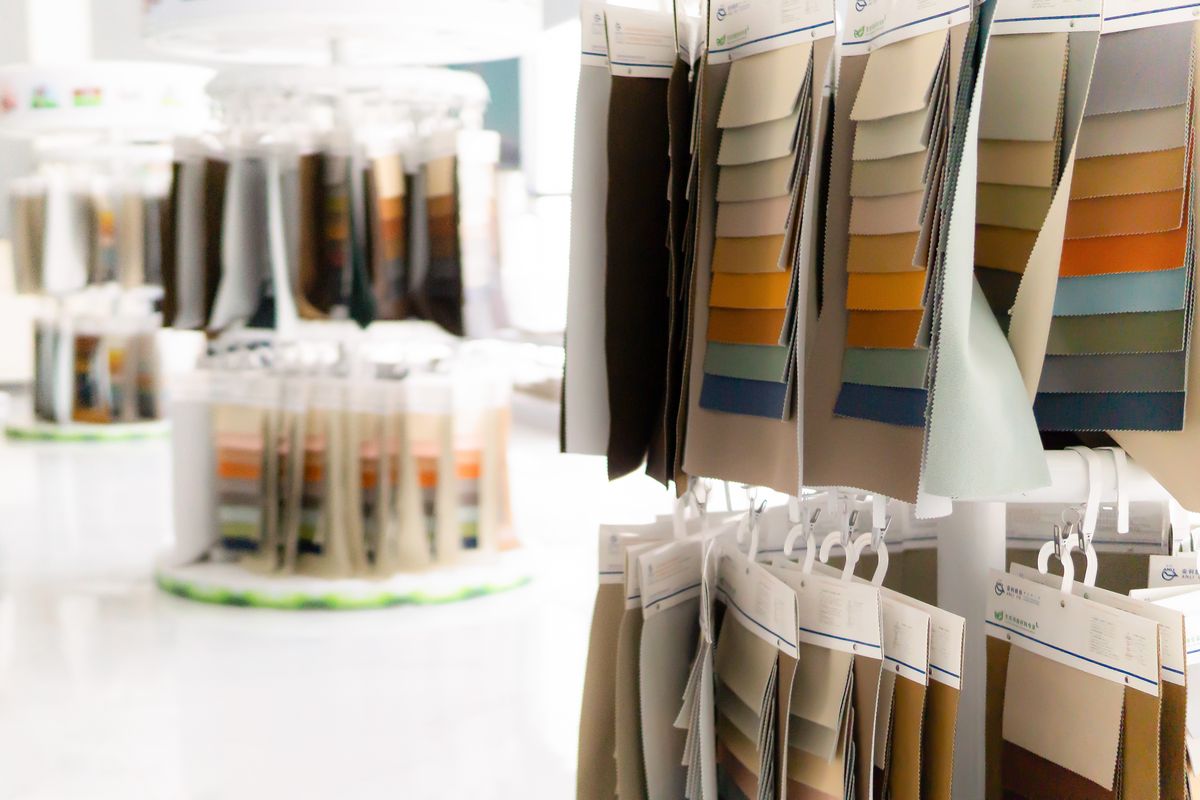
What to prepare when you order PVC or fabric printing
Give us the material, the artwork and the repeat size and direction, then confirm colour, position and finishing before bulk.
Read the guide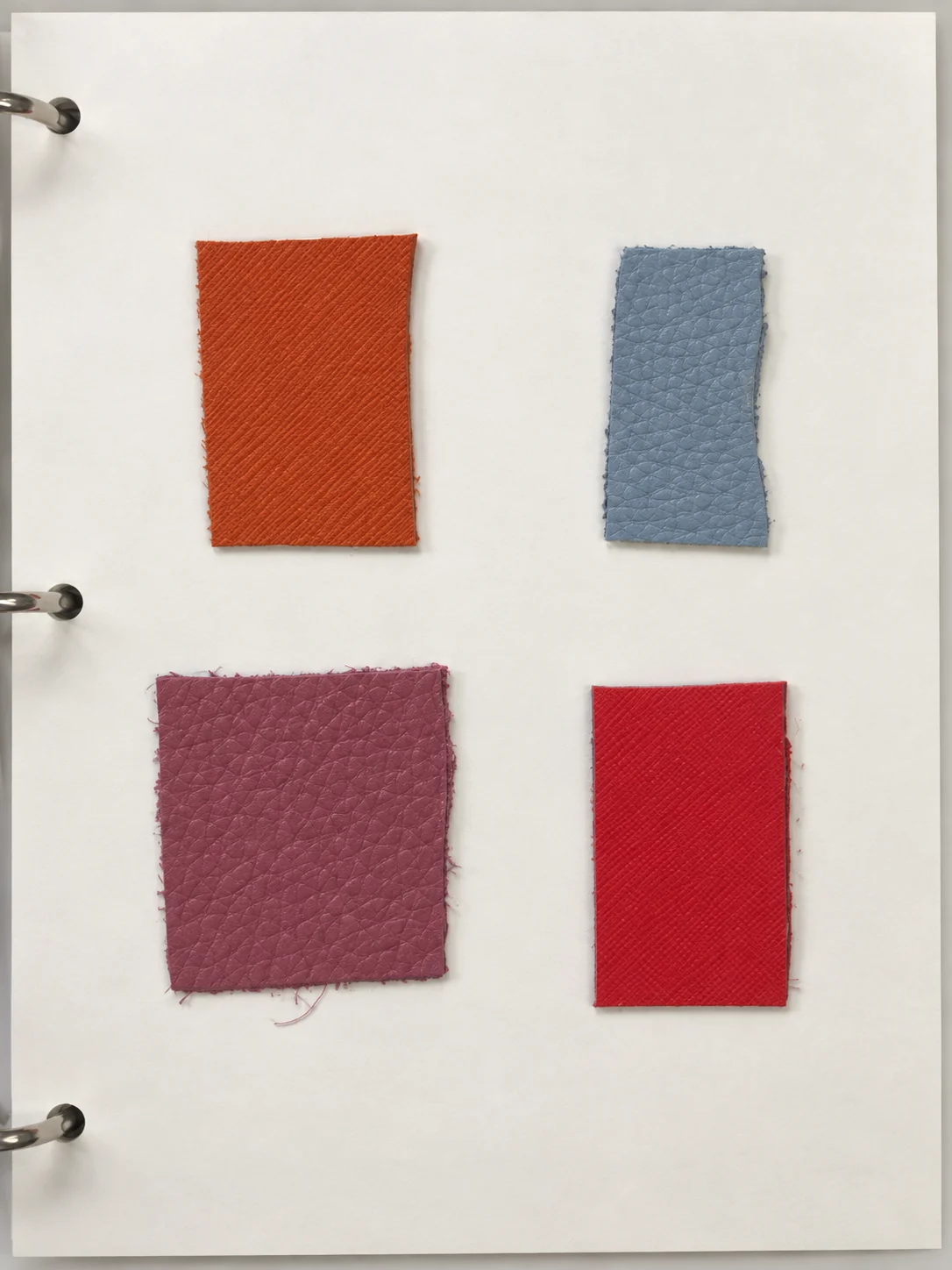
Vegan leather: reading the composition and the evidence
Look at three things separately: what the material is made of, whether it contains animal-derived material, and the environmental and performance claims.
Read the guide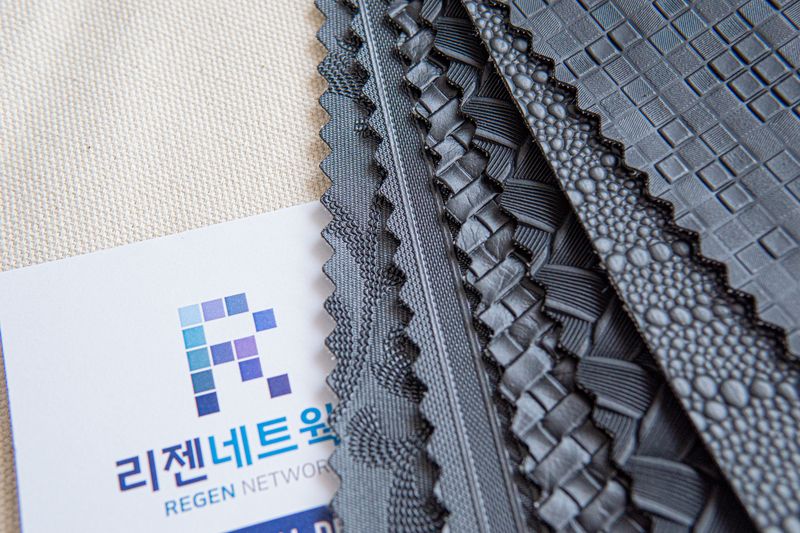
What you need to calculate sewing thread consumption
Work from seam length, stitch type, stitches per unit, material thickness and thread balance, and measure a trial seam when the calculation is uncertain.
Read the guide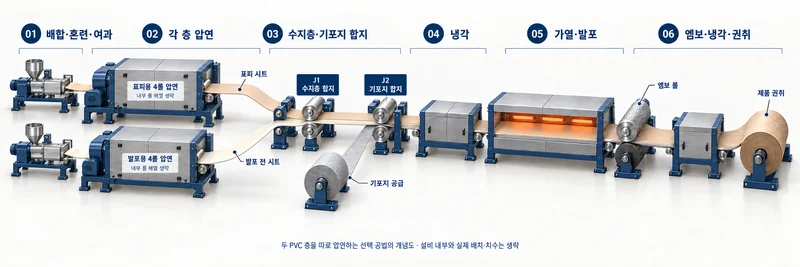
PVC calendering: combining layers, foaming and embossing
The surface-layer and foam-layer PVC are calendered separately, then combined with the backing fabric, heated to foam and embossed.
Read the guide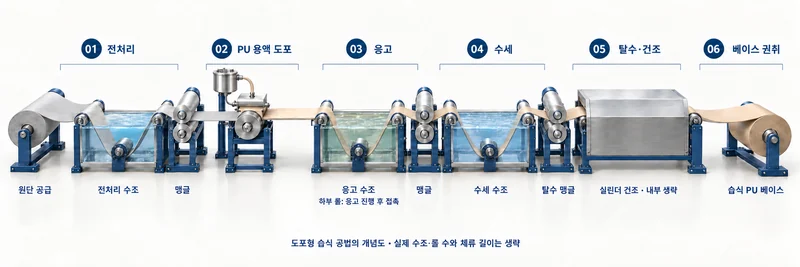
Wet-process PU: coagulating the coating in a water bath
A DMF-based PU solution is applied to fabric. Water and solvent exchange causes coagulation; washing and drying produce the base.
Read the guide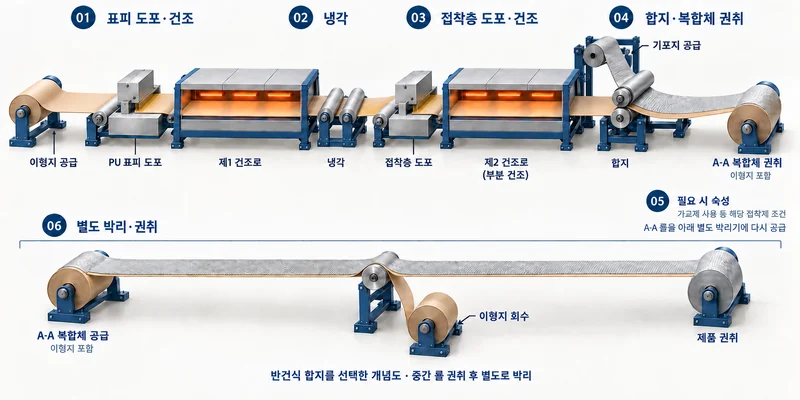
Dry-process PU: transferring a surface layer from release paper
The PU surface is formed on release paper. The adhesive is partially dried before bonding the fabric; the release paper is removed in a separate step.
Read the guide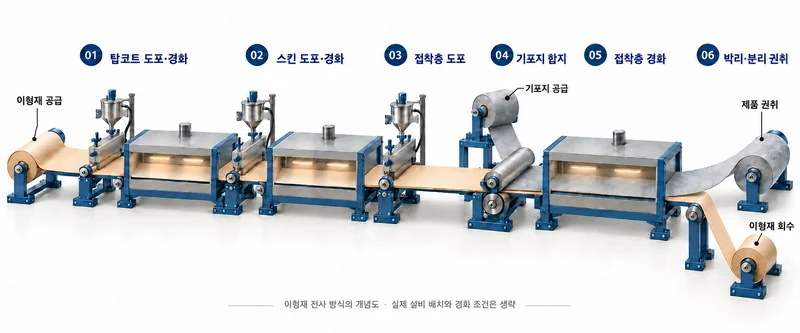
Silicone leather: forming the topcoat before bonding the fabric
The topcoat and skin are formed and cured in turn on a release carrier. Fabric is bonded to the adhesive layer while it is uncured or partially curing.
Read the guide
Works right now
Browse embossed grains in photographs, or search sewing terminology.
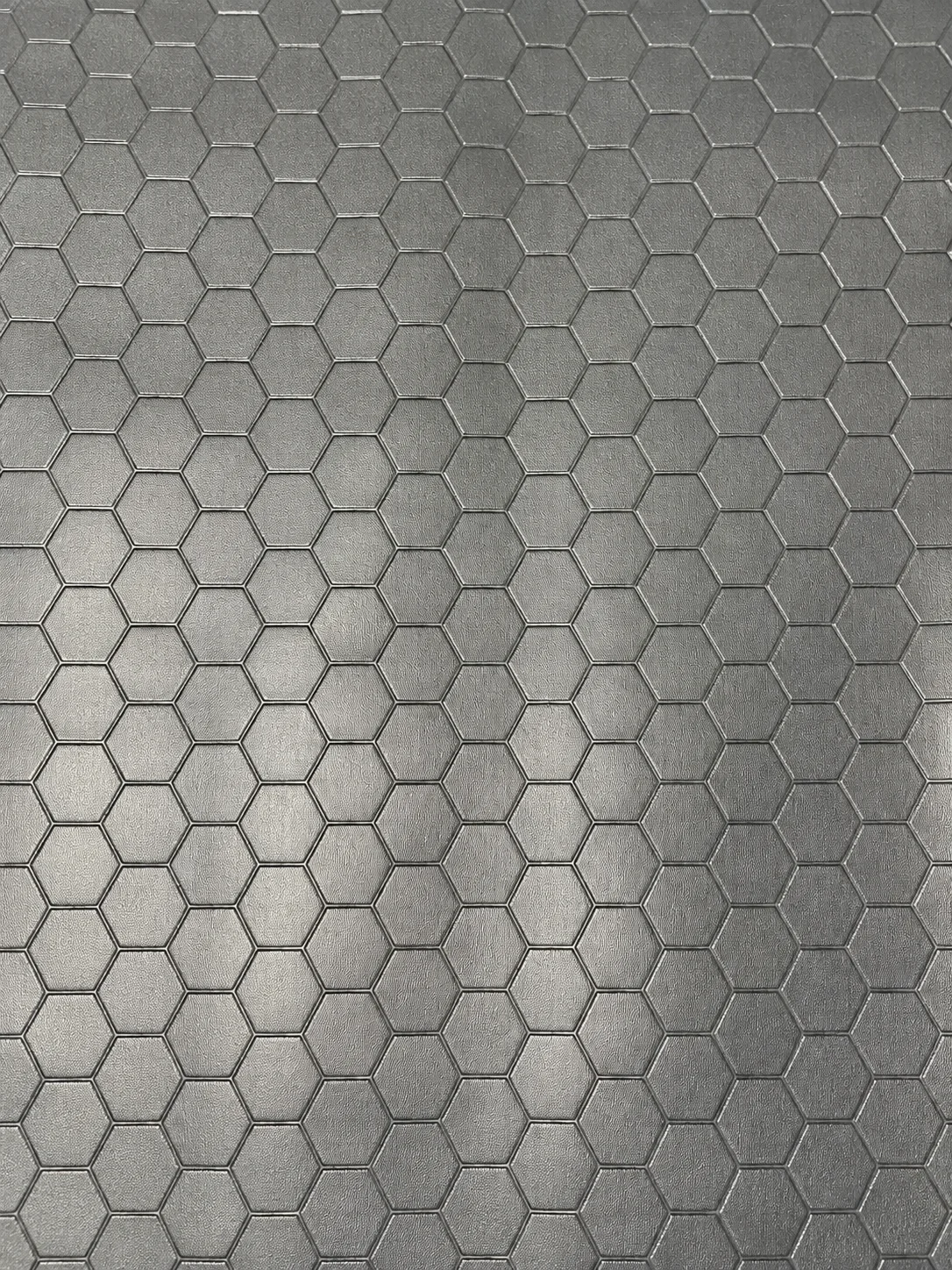 Samples · works right nowBrowse embossed samplesSearch by grain code and open the original photograph. Any sample can be added to your enquiry.
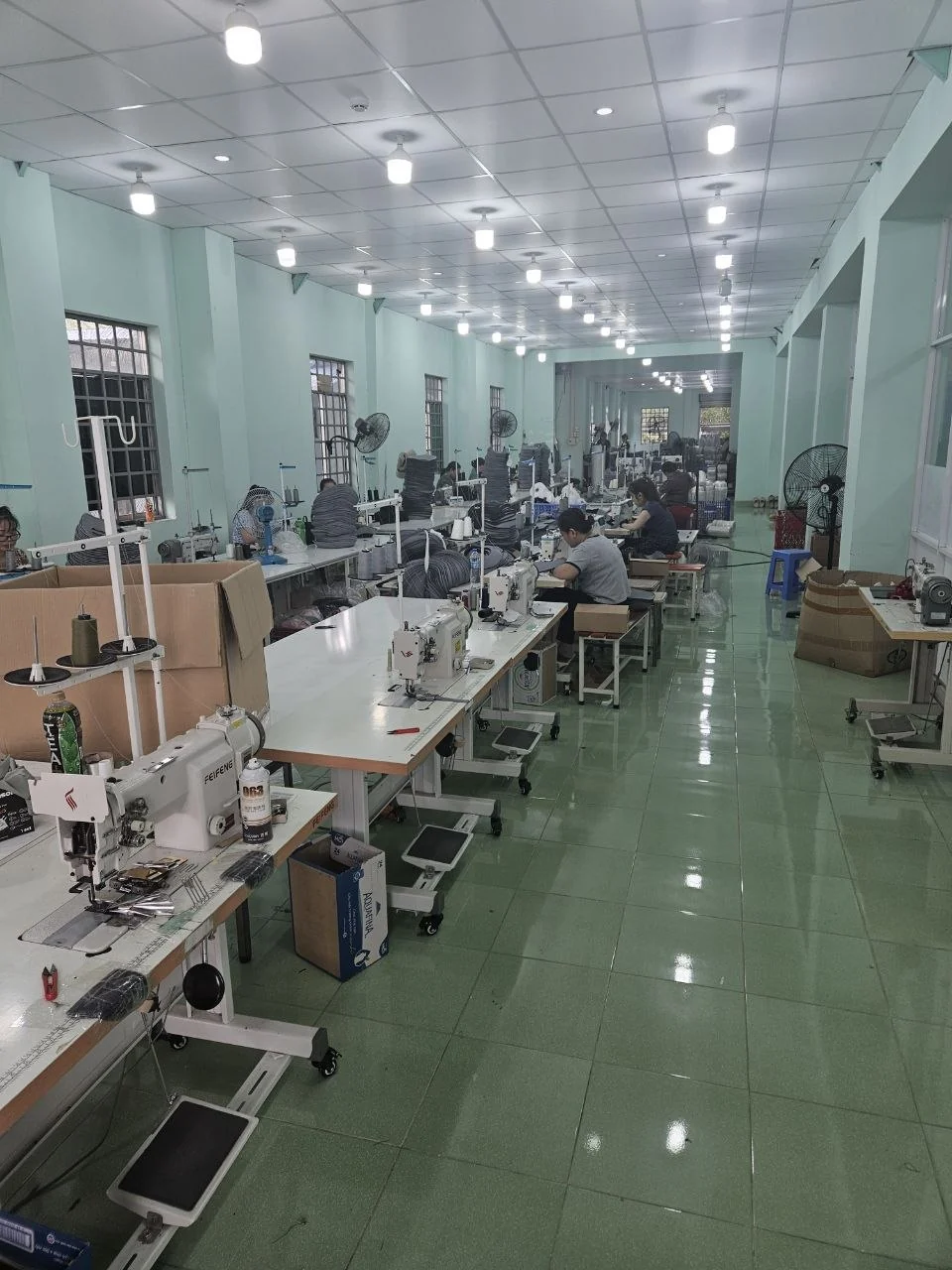 Terminology · works right nowSewing glossary1,786 terms in Korean, English, Vietnamese and Chinese, including the words used on the factory floor.
The sewing dictionary draws on Barneulwiki, run by REGEN as part of Transloom. View the KOCHAM resource post
Nothing found.
Try a shorter word such as PVC or emboss, or choose another field.