


Wet-process PU coagulates a coated PU solution in a water bath to form a porous layer. This guide follows the route that coats a DMF-based solution onto the fabric.
Water and solvent exchange, and the PU layer turns into a solid structure. The solvent is then washed out, and after dewatering and drying what remains is the wet PU base. The skin, grain and finish required in the finished product are added according to the final specification.
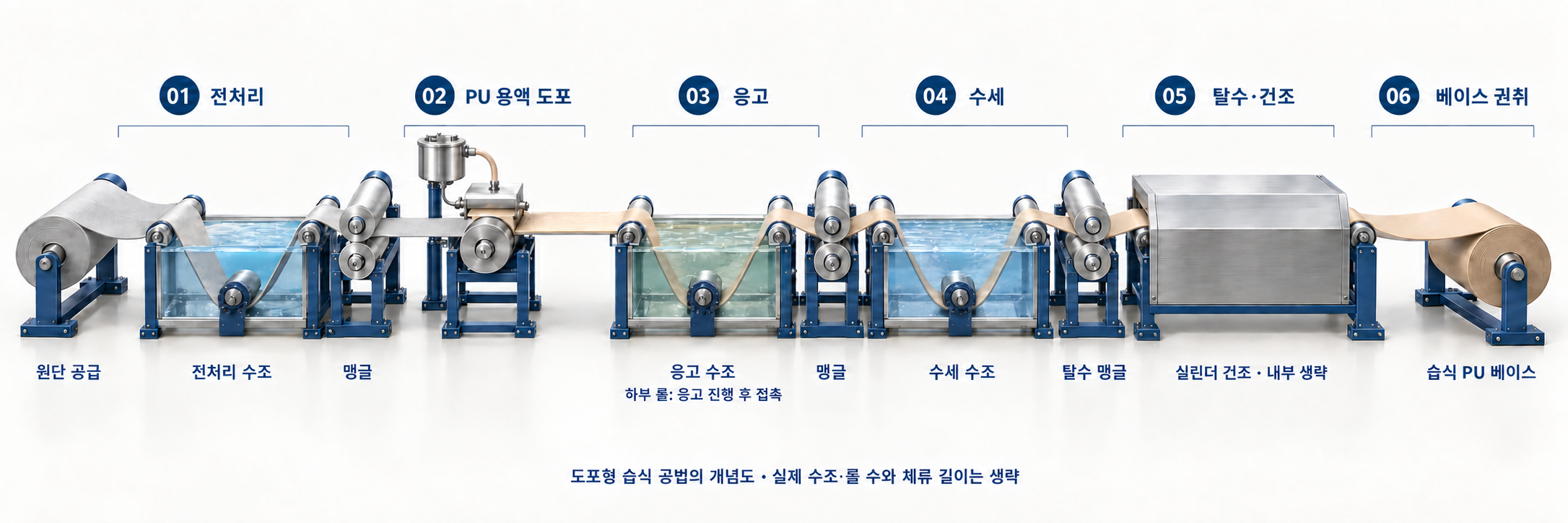
The numbers in the diagram show process order, not real equipment boundaries, distances or dimensions. Roll contact and support structures are simplified or omitted. For the exact material flow, read the route diagram and the step-by-step notes together.
From fabric pretreatment to winding the base
- Pretreat the fabric
Fabric unwinds from a single feed roll and passes through the pretreatment bath, then through a mangle that squeezes the liquid out between rolls.
- Coat the PU solution onto the fabric
The solution is coated with a doctor blade and other controls that set the amount. In the straight entry section the coated side faces up. The layer is still wet.
- Coagulate the PU layer in the bath
Water and solvent exchange, and the PU layer forms a solid structure. The guide rolls in the bath are drawn to contact after coagulation has begun. Exactly when contact starts, and how long the fabric stays in the bath, must both be verified on the line itself.
- Wash the solvent out
A mangle at the exit of the coagulation bath squeezes the liquid out before washing. The diagram shows one representative immersion section and omits the actual number of baths and guide rolls.
- Dewater and dry
The liquid is squeezed out in a mangle, then the sheet is dried. Coagulation built the resin structure; this step removes water and dries it.
- Wind the wet PU base
The wet PU base is wound onto a roll — the winding step. Any skin transfer and surface treatment the finished leather needs is specified separately.
Not the same as dipping, or as other PU routes
- Dipping immerses the fabric in the resin solution; it is not the coating route described here.
- A dry-process skin can be combined with a wet base. In that case wet and dry are two stages of one product.
- Water-based and solvent-free PU can form films or foam by different means; this DMF coagulation route is not applied to them as it stands.
Coagulation is not drying, and a base is not finished leather
Here the PU coagulates in a bath first; washing, dewatering and drying follow. An oven alone does not replace the coagulation bath.
The diagram stops at the wet PU base. Whether a skin layer is added, and how the grain and finish are made, both depend on the final product specification.
Material flow and process order
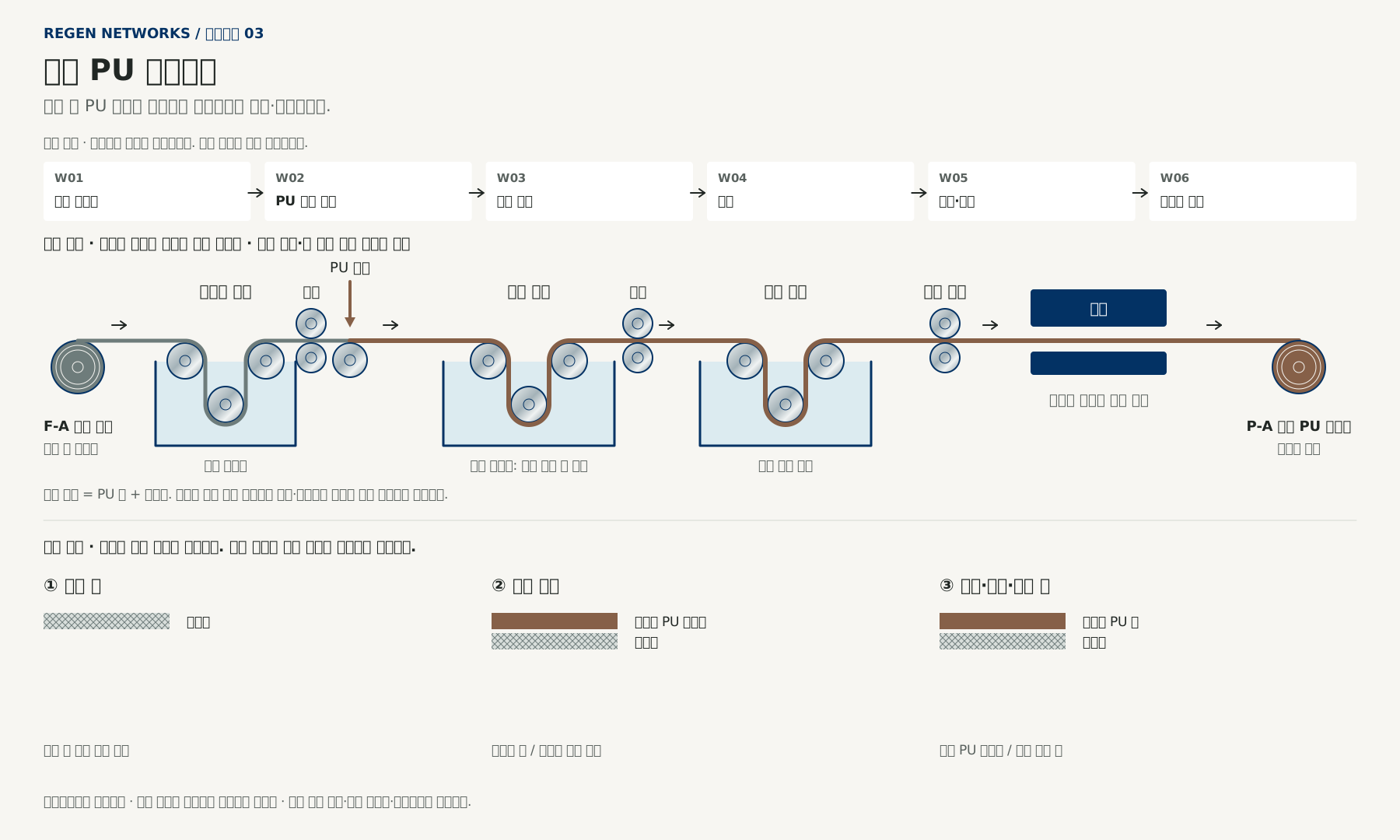
Coated on fabric, then coagulated in a water bath
A DMF-based PU solution is coated onto the fabric and coagulated in a water bath — a coating route, not the dipping method.
An AI explanatory diagram reconstructed from published manufacturing material. It is not a photograph of an actual plant, a reproduction of a REGEN line, an engineering drawing or a factory work standard.
Detail: how fabric, resin and liquid travel
| Route | Start | Link | End |
|---|---|---|---|
| F-A | Fabric feed roll | Pretreatment, mangle → coating → coagulation, mangle → washing → dewatering → drying | P-A winder |
| PU solution | Coating head | Coated layer on fabric → coagulated layer | Stays in P-A |
| Liquid | Pretreatment, coagulation and washing circuit | Water and solvent exchange in the bath | Effluent treatment, separately designed |
Terms from the bath and drying zones
- Coagulation
- The resin forms a solid structure as the solvent exchanges with a non-solvent that does not dissolve it.
- Washing
- The step that rinses the solvent out after coagulation.
- Mangle
- A pair of rolls the fabric passes through to squeeze the liquid out.
Sources
- Sanyo Chemical · Wet-Process Leather and Fabric Coating
2024-12-10, p.7 §3, Fig.2 & Fig.3
- Ocean Plastics · PU Knowledge
The Dry Process; Wet Process and PU Coagulation; Water-Based PU Leather
Written with reference to the sources above. The specification and performance of the material you buy must be confirmed from its own datasheet and test reports.
Enquire with this guide
Tell us the product or the change you have in mind. The title of the guide you are reading is added to your enquiry.
Prepare your enquiry