


A bag's outer face and a chair seat need different things. Choosing between PVC, PU and silicone takes more than the material name: what the product needs and how it is made have to be read together.
Work through it in order: which layers it is made of, where it is used, how it is processed. That makes it easy to explain to a supplier which sample is needed.
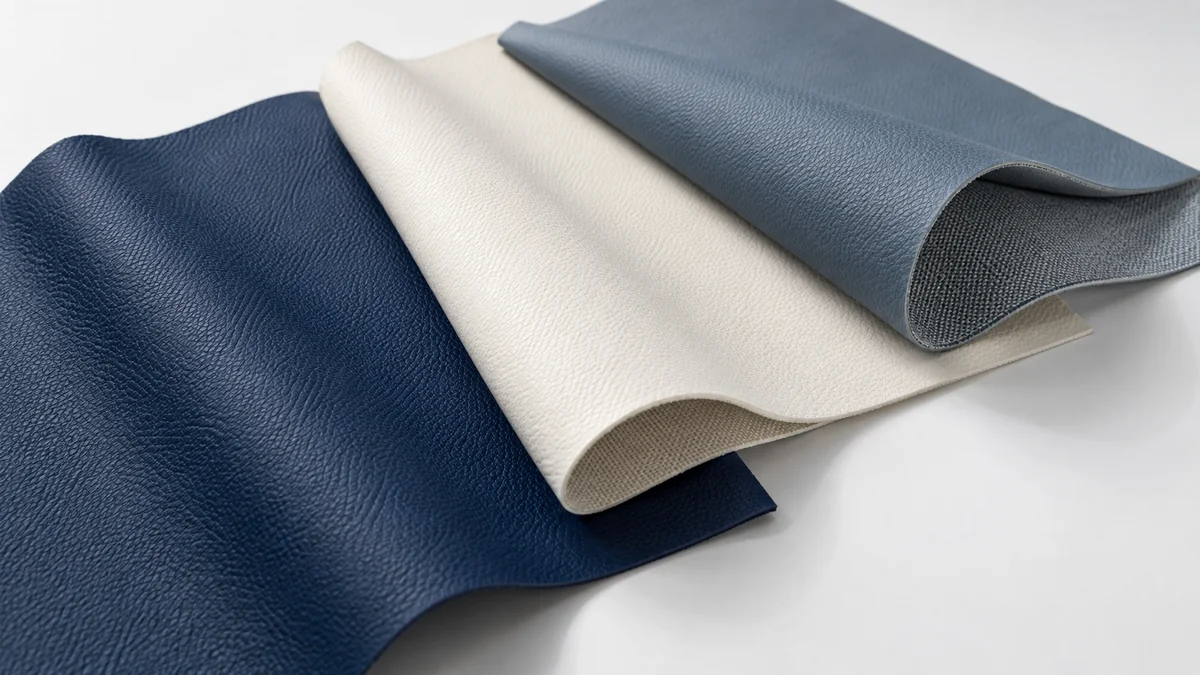
The same material name can hide a different build-up
Choosing synthetic leather means working through the surface you touch, the layers beneath it and the backing fabric, and asking what each is made of. The surface of a PVC roll can be finished with PU, so a trade name alone does not tell you the whole build-up.
The fabric left on the back is the backing, giboji in Korean. The name is close to the foamed layer that gives cushioning, but they are not the same. The table below is an example to help you understand the processes, not a fixed specification of layer count and thickness.
| Item | What to look at | Related processes |
|---|---|---|
| PVC | The PVC surface layer, any middle layers and the backing. Check whether there is a foam layer and whether the surface is finished separately. | PVC casting / PVC calendering |
| PU | The PU surface layer, the adhesive layer and the backing. Check the real structure, including whether a wet-process layer is used. | Wet-process PU / Dry-process PU |
| Silicone | The silicone coating, the top coat and the layer that bonds to the fabric. Check whether other materials are used alongside. | Silicone leather |
Some products use both wet-process and dry-process PU: a dry-process surface can be built on a wet layer with fine pores. Ask for a cross-section description along with the sample and the datasheet; these differences are then easy to spot.
Where it is used, and what it touches
A sample requested by material name alone is first judged on colour and feel. Before asking, write one sentence about where and how it will be used: even within one bag, the base, the handle and the body panel do different jobs.
- Product and part: Which product, which part, and whether it touches skin or another fabric.
- Conditions: Indoor or outdoor, and exposure to moisture, heat or sunlight.
- Cleaning: What it is cleaned with, how often, and whether washing is needed.
- Changes you cannot accept: Name the failures to avoid: peeling, colour transfer, colour shift, and the rest.
Developing a seat that gets wiped often means checking not only that the surface looks good but that it survives the cleaner used on it. A material name does not tell you which cleaners are safe.
Send the processing method with the sample request
A material that looked good on the roll still has to go through the process of making the finished product. Folding and sewing, bonding with adhesive, heat and pressure: each changes the list of things to test.
Rather than starting bulk from a flat swatch, ask for a trial sample made at the real part size and under real conditions. When changing material, say what should stay and what should improve.
Stating the aim, for example 'keep the current feel, but revisit the area that folds', opens the discussion: another material altogether, or a change of thickness, backing or finish.
Compare performance from the candidate's own data
Check that the supplier's test report covers the same specification as the sample in hand. Compare the code, thickness and backing, the surface finish, and the test items and conditions. A good result for a different specification says nothing about this sample.
Even within PU, hydrolysis resistance varies with the formulation and the manufacturing conditions. Nor should test weeks be read as years in service. The detail continues in PU peeling and hydrolysis.
'Eco-friendly', 'vegan' and 'high durability' each have to be checked separately: a material name does not fix the finished product's footprint or its service life. How to separate composition from certification is covered in the vegan leather guide.
Five things for a first sample request
- The product and the part it goes on
- Conditions and cleaning
- What to keep from the reference sample and what to change
- Thickness, colour and feel, plus cutting, sewing and bonding
- Quantity, schedule, budget and the test data needed
Not every condition has to be fixed from the start; separating what is settled from what is still open is enough. From there, for each candidate, work through the sample comparison checklistand the quote comparison points.
Sources
- Sanyo Chemical · Polyurethane Solutions for Dry-Process Leather
2024-09, pp.1, 3–5. PU application areas, PVC surface finishing, transfer coating and base construction.
- Sanyo Chemical · Polyurethane Solutions for Wet-Process Leather
2024-12, p.1 dry surface finishing applied to wet-process material; pp.4, 7 microporous layers and wet coating.
- ACT · Hydrolysis: What You Need to Know
Differences from formulation and manufacturing conditions, cleaner compatibility, and keeping test weeks apart from service years.
- Dow · EP4271762B1, Coating composition and its uses
[0090] Example build-up of top coat, silicone layer, tie coat and fabric. The structure in a particular patent is not generalised into a product specification.
Written with reference to the sources above. The specification and performance of the material you buy must be confirmed from its own datasheet and test reports.
Enquire with this guide
Tell us the product or the change you have in mind. The title of the guide you are reading is added to your enquiry.
Prepare your enquiry